Failure to Meet DOE Minimum Efficiency Requirements
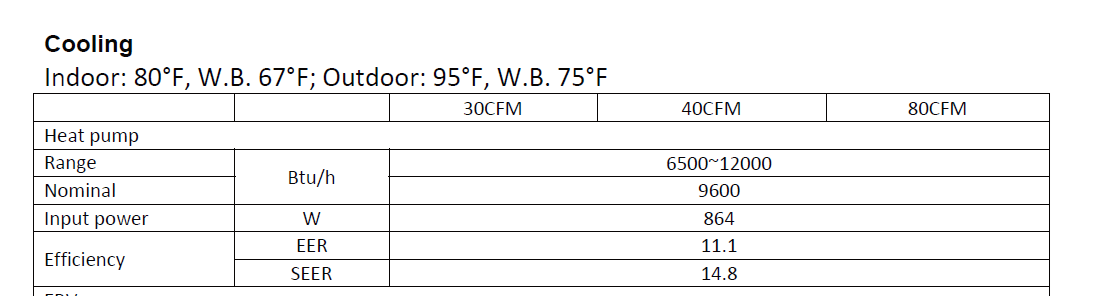
Wuxi Hammer manufactures Multi MFG MAIRHP-35-WM, which has a claimed nominal cooling capacity of 9,600 BTU.
Under federal law (10 C.F.R. Part 430 + AHRI 210/240), any 9,600 BTU heat pump in this class must meet:
13.4 SEER2 minimum to be legally sold, installed, or used in the United States.
Multi MFG misrepresents its 14.8 SEER2 rating, making it seem as if it complies; however, that 14.8 SEER2 rating is impossible and fake.
This alone renders the units illegal.
Fraudulent and Fake Numbers
Multi MFG MAIRHP-35-WM is manufactured by Wuxi Hammer (China), and Wuxi Hammer publishes very different numbers.
Wuxi Hammer claims the same unit has 12,000 BTU with a 16.95 SEER.
Apparently, when Multi MFG went to publish their own numbers, they didn’t trust the manufactured, fake data from Wuxi Hammer, possibly because Williams could do math, and saw the numbers didn’t make sense. Also, perhaps because Multi MFG strongly doubted that Wuxi Hammer, a Chinese company copying Ephoca’s unit, could achieve a higher capacity and better efficiency than Ephoca. Therefore, in all probability, Multi MFG further reduced the capacity and efficiency, hoping that at least these reduced numbers would seem authentic.
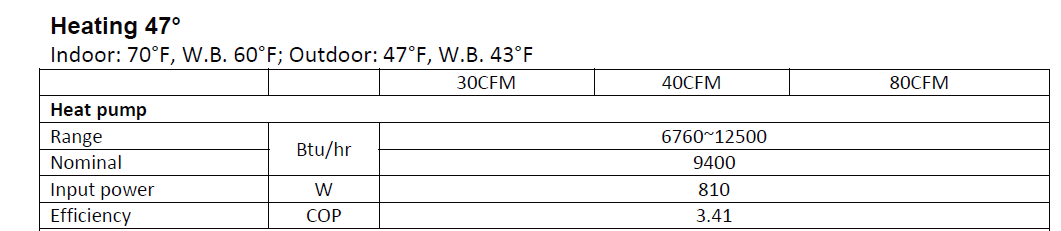
Multi MFG reduced the totally fake 12,000 BTU to a more reasonable 9,400 BTU and dropped the SEER from an insanely fake 16.95 to a more conservative 14.8. Multi MFG did a much better job fudging the data than their manufacturer, who provided the counterfeit data by ensuring the math would work and using more realistic numbers. However, the data Multi MFG provides is still bogus.
Summary of Violations
Multi MFG MAIRHP-35-WM:
Multi MFG MAIRHP-35-WM cannot legally be sold, installed, or used in the United States, and we back that statement with a $1,000,000 Guarantee.

A salesperson promoting units with falsified or illegal performance data risks personal and professional consequences. Clients who suffer damages may hold the salesperson responsible for misrepresentation or fraud. Employers may terminate or refuse to defend sales staff who recommend illegal equipment. Commission chargebacks, civil claims, and reputational harm are all realistic outcomes. Only by selling certified, verifiable units can salespeople protect themselves from future liability.
Selling a non-compliant HVAC product is a direct violation of EPCA and DOE regulations. Sellers are exposed to:
Federal Civil Penalties
DOE may issue daily fines for every unit distributed in commerce. Penalties accumulate and can reach six-figure outcomes per model.
Product Seizure and Forced Recall
DOE can seize inventory, block further distribution, and mandate the recall or destruction of illegal equipment.
FTC Enforcement
Publishing fabricated ratings constitutes deceptive trade practices under the FTC Act §5. This exposes the seller to federal enforcement, mandatory corrective advertising, and civil penalties.
Breach of Contract and Indemnification Claims
Developers, contractors, and property owners can sue the seller for damages if the installed equipment fails inspection, fails commissioning, or causes code violations.
Class-Action Exposure
Tenants, condominium associations, and homeowner groups can sue for misrepresentation, damages, energy cost inflation, or unsafe equipment.
Loss of Manufacturer and Distributor Licenses
OEM partnerships and distribution channels can be terminated for selling illegal equipment.
Selling these units is legally and financially dangerous.

Distributors can face federal enforcement for placing illegal equipment into commerce. If the DOE initiates an investigation, distributors can be fined per unit, may be required to recall inventory, or held responsible for downstream damages caused to installers, owners, and residents. Claims from contractors and engineers who relied on distributor representations can also arise. Stocking and selling non-certified equipment exposes the distributor to major financial loss and long-term harm to industry relationships.

Installing and selling non-compliant units places you on the hook and can cost you the expense of having to rip out these units and refund buyers.
Installing non-compliant equipment exposes the installer to direct professional and legal risk.
Violation of State and Local Mechanical Codes
Most jurisdictions require installed equipment to be listed, certified, and compliant with DOE minimums. Installing unlisted units violates the code.
Loss of Contractor License
State boards can suspend or revoke licenses for installing non-certified or illegally rated equipment.
Civil Liability for Damage
If the unit fails, performs below spec, overdrafts electrical circuits, leaks refrigerant, or causes mold or structural damage, the installer can be sued.
Professional Negligence Claims
Installing non-certified equipment is a breach of standard practice.
Insurance Denial
Work performed with illegal equipment can void contractor liability insurance coverage. Installers who choose these units are assuming direct legal and financial responsibility.

Engineers who approve or specify units using falsified efficiency data face serious professional liability. Stamping plans that rely on illegal or noncompliant equipment can be grounds for claims of negligence, breach of duty, or malpractice. Projects may need redesigns or retrofitting at the engineer’s expense. Insurance carriers may deny coverage if the engineer failed to verify compliance. In extreme cases, specifying illegal equipment can jeopardize licensure and professional standing.
Engineers face a high risk of exposure if they specify or approve illegal equipment.
Professional Malpractice Exposure
Specifying equipment that is not SEER2 compliant, fails classification requirements, or is absent from AHRI/CCMS databases is a breach of engineering duty.
Loss of PE License
Stamping drawings with illegal, misclassified equipment creates direct disciplinary risk.
Design Liability
If the equipment fails to meet code, fails load calculations, causes tenant complaints, or drives excessive energy use, the engineer is liable for damages.
Insurance Exposure
Errors & Omissions insurers reject claims involving knowingly illegal equipment. Any engineer who signs off on these units is accepting personal liability.

Installing non-compliant units exposes you to tenant litigation. It also means the units many not be powerful enough in the summer, so residents will complain. In winter it will use more of the electric heat as the heat pump numbers are fake, inflating your residents' bills. You may also need to rip out and replace such units with code complaint ones.
Owning a building with illegal HVAC equipment exposes the owner to substantial financial and legal risks.
Code Violations and Failed Inspections
Buildings containing non-certified equipment can fail DOB/DBI/Local Authority inspections.
Forced Removal and Replacement
Authorities can mandate the removal of every installed unit, at the owner’s expense.
Insurance Cancellation or Claim Denial
If the equipment is not legal or not DOE-compliant, insurers may deny coverage or void property insurance policies.
Reduced Property Value
Buildings with illegal equipment face valuation reductions, impaired financing, and lender objections.
Tenant Lawsuits and Warranty Claims
Tenants can sue for non-performance, high heating/cooling costs.
Fines and Enforcement Actions
Owners can be fined for every illegal unit installed or operated within the building. Owning or operating these units exposes the property to material legal and financial damage.

The units do not meet the minimum energy requirement set forth by the DOE. In plain English, this means the units use more power than is legally permitted, costing you more money every single hour!
Even the resident or end-user is exposed to risk when using non-compliant equipment.
High Energy Bills and Poor Performance
Because the published performance data is fake, real-world operation costs are substantially higher than the claimed ratings.
End-users bear financial and safety risks from equipment that cannot be trusted.
Ephoca guarantees that the performance numbers published by “Multi MFG” are fake.
Ephoca will pay $1,000,000 to any manufacturer, distributor, engineer, or entity that can produce a certified, independent laboratory test report corroborating the claimed capacity and efficiency when tested in accordance with DOE regulations.